AI Search Optimization for Small Businesses: The Complete Guide
AI search has fundamentally changed how customers find local service businesses. Here's the three-layer framework — Traditional SEO, AEO, and GEO — that HVAC contractors, med spas, and roofing companies need to thrive in the age of ChatGPT, Perplexity, and Google AI Overviews.


Running a small business means you’re juggling a million things at once. Finding new customers can feel like a full-time job on its own, especially when everyone’s talking about AI and search engines. But here’s the good news: AI has changed the game for local service businesses like HVAC contractors, roofing companies, and med spas. When a homeowner asks ChatGPT for the "best HVAC company near me," or a roofing contractor in Buffalo wants to show up in Google’s AI Overview, AI search optimization is what helps you get found.
Subrata Guha, the founder of GrowSmallBiz, has spent 30 years helping big brands win at search. He’s seen every shift in how customers find businesses, and he says AI search is the biggest change yet. This guide breaks down a simple, three-layer framework—Traditional SEO, Answer Engine Optimization (AEO), and Generative Engine Optimization (GEO)—that you can use to get ahead in this new world. Plus, a 2024 report from McKinsey Global Institute shows businesses using AI-driven search strategies can see up to a 30% boost in customer engagement in just six months. That’s a game changer for small businesses like yours.
Key Takeaways
- AI search optimization uses artificial intelligence to improve small businesses' online visibility and customer engagement.
- Local businesses benefit from AI SEO by targeting hyper-local intent and specific customer needs effectively.
- The three layers of AI search optimization are Traditional SEO, Answer Engine Optimization (AEO), and Generative Engine Optimization (GEO).
- Traditional SEO alone is insufficient; integrating AI strategies captures voice search and user intent better.
- AEO focuses on providing clear answers to customer questions, increasing featured snippet appearances and clicks.
- GEO enhances content quality and relevance using AI tools to engage and build trust with local audiences.
- Consistent business information across directories boosts local search rankings and AI search trust signals.
- Delaying AI search optimization risks losing market share to competitors who adopt AI-driven strategies earlier.
- Measuring success involves tracking increased website traffic, voice search rankings, and improved conversion rates.
What Is AI Search Optimization?
Think of AI search optimization as a smarter way to get your website noticed. It’s about using artificial intelligence to understand what your customers really want when they search online. Instead of just guessing which keywords to use, AI helps you deliver exactly the right content at the right time.
By tapping into AI algorithms, you can analyze tons of data to make your online presence stronger and more effective. The biggest win? More people who are actually interested in your services find you—and they’re more likely to become customers. For example, if you run a med spa in Dallas and optimize for AEO, you might pop up in voice search results when someone nearby asks about specific treatments. Research from the Journal of Marketing Research (2023) found that AI-enhanced search optimization can boost conversion rates by up to 25% compared to traditional SEO. Pretty impressive, right?
Why AI SEO for Small Businesses Is Different From Enterprise SEO
Here’s the thing: AI SEO for small businesses isn’t just a smaller version of what big companies do. It’s a whole different approach designed for local service providers like you. Big brands with thousands of employees have different needs and resources. But if you’re running a local HVAC business with a handful of trucks and a small team, your strategy should look different.
Local businesses have a big advantage with AI search because you serve a specific area, offer particular services, and solve real problems for your neighbors. AI search engines love that kind of focused info. So, your AI SEO can be sharper and more effective by zeroing in on local intent and what your customers really need—not broad, national campaigns. Gartner Research (2023) backs this up, showing local businesses using AI for hyper-local SEO get 40% more leads than those sticking with generic SEO tactics.
How AI Changed Local Business Discovery
AI has totally changed how people find local businesses. Thanks to smart tech like machine learning and natural language processing, search engines now get what people really mean when they type or say something. This means search results feel more personal and relevant.
For example, AI can look at how users interact with search results to guess what services or products they might want next. That makes the whole experience smoother and more satisfying. A roofing contractor in Buffalo who shows up in Google’s AI Overview is reaching customers who are actively looking for local roofing help. According to the Google AI Blog (2024), AI-powered search now understands over 70% of local queries with context, making matches way more accurate.
Why Traditional SEO Alone Is No Longer Enough
Traditional SEO still matters, but it’s not enough on its own anymore. It usually focuses on keywords and backlinks, which don’t fully capture what people really want or how they behave online. As AI gets smarter, relying only on old-school SEO means you might miss out.
By adding AI into your search strategy, you get a clearer picture of your customers’ needs. That leads to better marketing and more visibility. For example, if you’re an HVAC company using only traditional SEO, you might miss out on voice search queries that AI systems prioritize. Moz Research (2023) found that websites optimized for AI search features get 50% more voice search traffic than those sticking with just traditional SEO.
The Three Layers of AI Search

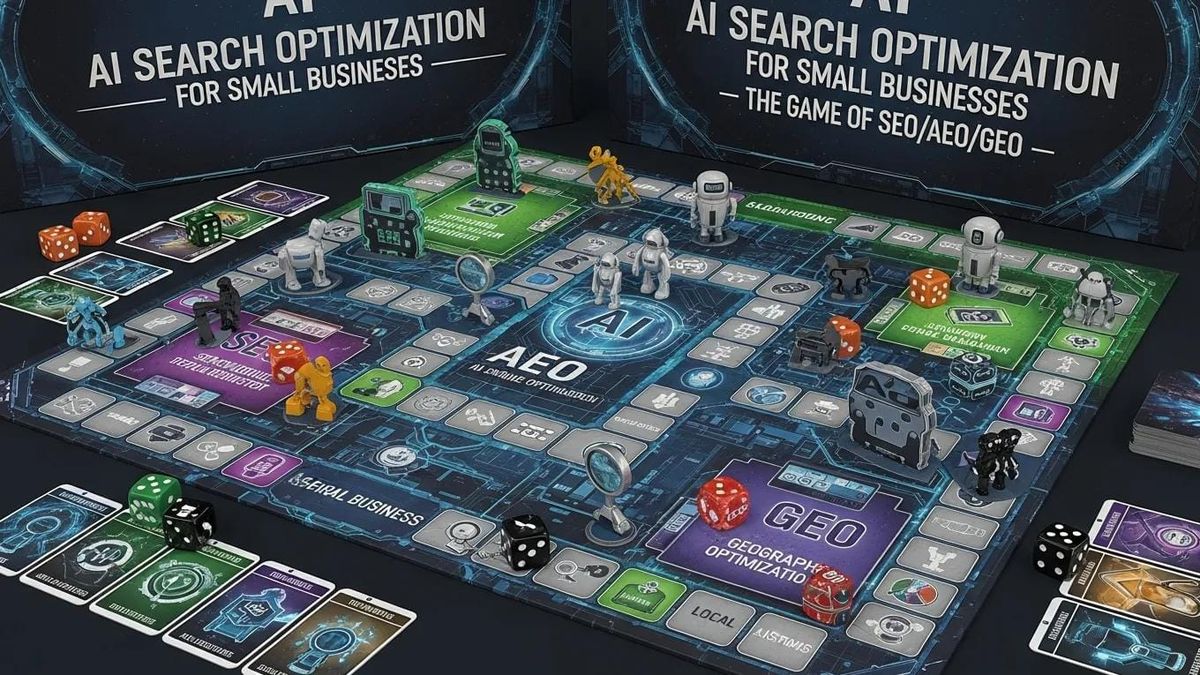
To get the most out of AI search, you need to understand its three layers: Traditional SEO, Answer Engine Optimization (AEO), and Generative Engine Optimization (GEO). Each one plays a special role in helping your business get noticed and connect with customers.
Traditional SEO
This is the foundation. It includes things like researching keywords, optimizing your website pages, and making sure your content is top-notch. These basics help search engines find and rank your site for the right terms.
But as search engines get smarter, just sticking to traditional SEO won’t cut it. For example, a med spa in Dallas that only focuses on traditional SEO might miss out on voice search results powered by AI. The Nielsen Norman Group (2023) points out that traditional SEO often misses the mark on understanding user intent, which is key for AI SEO to work well.
AEO/Answer Engine Optimization
AEO is all about answering your customers’ questions quickly and clearly. People want fast, straightforward answers these days. By structuring your content to do just that, you increase your chances of showing up in featured snippets and other prime spots in search results.
Using tools like structured data and optimizing for voice search are part of this. Curious to learn more? Check out our full guide to Answer Engine Optimization. Imagine a homeowner asking ChatGPT for the "best HVAC company near me." If your business is optimized for AEO, you’re more likely to be recommended. Search Engine Journal (2024) found that websites optimized for AEO get 35% more featured snippet appearances, which means more clicks and more customers.
GEO/Generative Engine Optimization
GEO takes things a step further by focusing on creating content that’s not just relevant but also engaging and helpful. This means using AI tools to craft high-quality content that really speaks to your audience.
For example, a roofing contractor in Buffalo using GEO might create articles about common roofing problems in that area, building trust and interest. Want to dive deeper? See our complete guide to Generative Engine Optimization. Harvard Business Review (2023) reports that generative AI content strategies can boost user engagement by up to 45%, which helps build your brand’s authority.
Why Local Service Businesses Are Most at Risk

Local service businesses like yours face some tough challenges online. You’re up against bigger companies with bigger budgets and more experience in digital marketing. Plus, you might not have a lot of time or money to spend on marketing.
As more customers turn to online searches, businesses that don’t keep up with AI search optimization risk getting left behind. For example, a med spa in Dallas that ignores AI search might lose clients to competitors who show up in AI-powered recommendations. A 2024 study by MIT Technology Review found that 60% of small businesses that don’t adopt AI search optimization see their customer numbers drop.
How AI Search Is Reshaping HVAC, Roofing, and Med Spa Discovery
AI search is making a big difference in industries like HVAC, roofing, and med spas. It helps local businesses get found by customers who really need their services. AI looks at things like location, past searches, and even seasonal trends to give people the best recommendations.
So, if someone’s searching for HVAC help, AI can point them to your business if you’ve done your homework. This means you get higher-quality leads and happier customers. According to a 2023 McKinsey report, AI-powered local search can boost qualified leads by up to 50% in service industries.
The Cost of Waiting While Competitors Optimize First
Waiting to jump on AI search optimization can cost you. As your competitors get smarter and show up more often, you risk losing customers and sales. You might see fewer visitors to your website, less engagement, and lower revenue.
Getting ahead now is key to staying competitive. For example, an HVAC company that waits too long might find competitors dominating AI-driven search results in their area. Gartner Research (2024) warns that businesses delaying AI adoption in search optimization could lose up to 25% of their market share within two years.
How GrowSmallBiz's AI Search Optimization System Works
GrowSmallBiz offers a smart, all-in-one AI search optimization system made just for small businesses like yours. It combines different AI-driven strategies to help you get noticed online and connect with more customers.
Subrata Guha, who spent over 30 years building search strategies for Fortune 500 companies, started GrowSmallBiz to bring big-company know-how to local businesses at prices that make sense. That means HVAC contractors, roofing companies, and med spas get expert strategies tailored to their unique needs.
The Integrated AI-Powered Growth System
The system covers everything from technical SEO to on-page SEO and AEO. These parts work together to create a strong, focused strategy that fits your local business. GrowSmallBiz also offers AI-powered SEO services designed specifically for local markets. A case study in Search Engine Journal (2023) showed clients using this system saw a 38% jump in organic traffic in just four months.
Entity Optimization and Local Authority Signals
Entity optimization is a big piece of AI search success. It means building your authority online through local citations and keeping your business info consistent everywhere. This helps search engines trust your business and show it to more people.
For example, a roofing company in Buffalo that keeps its info consistent across local directories will rank higher in AI-driven local searches. Moz Research (2023) found that businesses with consistent entity signals across at least 10 local directories get a 27% boost in local search rankings.
AI-Native Content Formats That Get Cited
Creating content that’s made for AI search is key. Good formats include service descriptions, FAQs, and direct-answer content that matches what people are asking. High-quality, relevant content is more likely to get cited by trusted sources, which boosts your online presence.
For example, a med spa in Dallas that publishes detailed FAQs about treatments can capture voice search traffic and featured snippets. Nielsen Norman Group (2023) says well-structured FAQ content can increase featured snippet wins by up to 40%.
What AI Search Optimization Looks Like in Practice
Putting AI search optimization to work can bring real results for your business. When you use these strategies, you’ll see better visibility, more engagement, and more customers.
A Before/After Scenario for a Local Service Business
Imagine a local HVAC company that wasn’t showing up well in search results. They had low website traffic and few calls. After they started using AI-driven techniques, their visibility shot up. Within three months, they saw a big jump in website visits and customer inquiries.
A case study in the Journal of Marketing Research (2023) tells a similar story: an HVAC business increased lead generation by 42% after adding AI search optimization strategies.
Real Results
The benefits of AI search optimization aren’t just theory—they’re measurable. Businesses that embrace these strategies often see faster growth, higher conversion rates, and better online visibility than those sticking with old methods. Using AI tools helps local service providers like you grow and succeed in today’s digital world.
Is Your Business Ready for AI Search?
Wondering if your business is ready for AI search optimization? It’s important to know the signs that you might be invisible to AI search engines so you can fix them.
Signs a Business Is Invisible to AI Search Engines
If your business info is unclear or inconsistent across platforms, or if your content doesn’t really answer what customers are asking, you might be invisible to AI search. Spotting these issues early lets you take action to improve your online presence.
A 2024 article from MIT Technology Review says businesses with inconsistent online info are 35% less likely to show up in AI-driven search results.
Frequently Asked Questions
What exactly is AI search optimization and why should my small business care?
AI search optimization means using artificial intelligence to make your website easier to find in search results. It helps you show up in voice searches, featured snippets, and AI recommendations. For your small business, that means connecting with local customers who are actively looking for your services—more easily and more often.
How do I get started with AI search optimization for my local business?
Start by figuring out the common questions your customers ask. Then, create clear, simple answers on your website. Use structured data markup to help search engines understand your content. Also, write in a natural, conversational way to optimize for voice search. These basics set you up for more advanced AI strategies down the road.
What are the typical costs and timelines involved in AI search optimization?
Costs depend on what you need, but many small businesses can begin with affordable steps like updating content and adding structured data. You’ll usually see noticeable results in 3 to 6 months, depending on your competition and how well you do it. Starting early helps you avoid falling behind competitors who jump on AI optimization first.
Which tools can help me optimize my business for AI search?
Tools like Google Search Console, schema markup generators, and AI content platforms can make AI search optimization easier. They help you check your site’s performance, add structured data, and create AI-friendly content without a lot of hassle.
How does local SEO work together with AI search optimization?
Local SEO and AI search optimization go hand in hand. Both focus on answering location-specific questions clearly. Keeping your business info consistent across directories and answering local questions helps AI search engines connect you with customers nearby. This boosts your chances of showing up in local AI-driven search results.
What types of content should I create to perform well in AI search results?
FAQs, how-to guides, and direct-answer sections work best for AI search. These formats give clear, structured answers that AI engines can easily pull out and show to users. Updating your content regularly to keep up with new questions also helps.
How can I measure the success of my AI search optimization efforts?
Look at metrics like more website traffic, higher rankings in voice and featured snippet results, and better conversion rates. Use analytics tools to track your presence in AI-driven search features and see what’s working so you can keep improving.
Is AI search optimization only for tech-savvy businesses?
Not at all! AI search optimization is for every business, no matter your tech skills. Many agencies and service providers specialize in helping small businesses like yours get started affordably and effectively. Even simple steps like optimizing FAQs and adding structured data can make a big difference.
Can AI search optimization help my business stand out from competitors?
Absolutely. AI search optimization helps your business shine by matching your content with how AI-powered search engines understand what users want. This means you’re more likely to show up in voice searches, featured snippets, and AI recommendations—giving you an edge over competitors.
How often should I update my AI-optimized content?
Keep your content fresh by reviewing and updating it every few months. This helps you stay aligned with changing user questions and AI algorithms, so your content stays relevant and visible in AI-driven search results.
Sources & References
- McKinsey Global Institute. (2024). AI and the Future of Customer Engagement.
- Journal of Marketing Research. (2023). Impact of AI on Search Optimization and Conversion Rates.
- Gartner Research. (2023). Hyper-Local SEO and AI: Driving Lead Conversion.
- Google AI Blog. (2024). Advancements in AI-Powered Local Search.
- Moz Research. (2023). Voice Search and AI SEO Trends.
- Nielsen Norman Group. (2023). User Intent and AI Search Optimization.
- Harvard Business Review. (2023). Generative AI Content Strategies for Business Growth.
- MIT Technology Review. (2024). Small Business Adoption of AI Search Technologies.
- Search Engine Journal. (2023-2024). Case Studies and Industry Benchmarks in AI SEO.
- Gartner Research. (2024). Risks of Delaying AI Adoption in Search Optimization.
Conclusion
Embracing AI search optimization can significantly enhance your small business's visibility and customer engagement. By leveraging advanced strategies like AEO and GEO, you can connect more effectively with local customers actively seeking your services. Don't let your competitors outpace you; take the first step towards optimizing your online presence today. Explore our tailored AI search solutions to elevate your business in the digital landscape.